
How Can a 250W Customized LED Street Light Head Improve Road Lighting?
Article Summary
A 250W customized LED street light head can be considered for roadways, industrial access roads, logistics facilities, and other outdoor lighting applications that require carefully planned illumination. However, selecting a fixture based on wattage alone can lead to poor light distribution, unnecessary energy consumption, glare, or installation difficulties. Buyers should evaluate luminous output, optical distribution, mounting dimensions, ingress protection, thermal management, electrical compatibility, and applicable project standards together. This guide explains how to define project requirements, assess customization options, compare lighting configurations, calculate operating costs, and evaluate suppliers. With a structured purchasing process, businesses can specify a street lighting solution that better matches site conditions, maintenance requirements, and project budgets.
01 · Product Overview
Understanding a 250W Customized LED Street Light Head
Outdoor lighting projects face a common challenge: providing sufficient visibility across a road or working area without creating excessive glare, uneven brightness, or unnecessary electricity costs. A properly specified LED street light head can help address these concerns through an appropriate combination of LED output, optical design, housing construction, and electrical control.
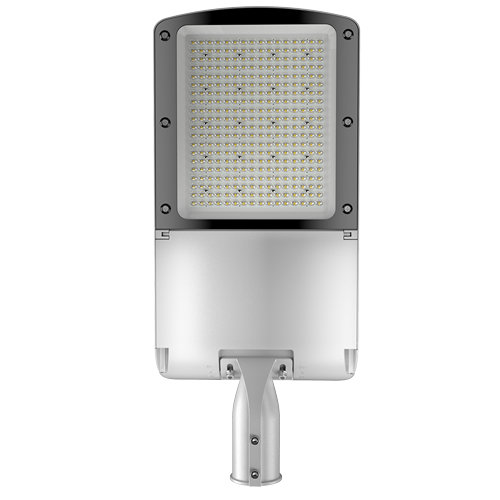
A 250W customized LED street light head generally refers to a street lighting fixture designed around a nominal power rating of 250 watts, with selected features adjusted to meet a particular project's requirements. Depending on the manufacturer and product configuration, customization may involve optical lenses, correlated color temperature, mounting arrangements, control interfaces, housing finish, or electrical input specifications.
It is important to distinguish electrical power from actual lighting performance. Two fixtures rated at 250W may produce different amounts of light and distribute it differently across a road. LED efficacy, driver performance, thermal management, lens design, and operating conditions all influence the final result.
For contractors and procurement teams, the objective should therefore be to specify the complete lighting solution rather than purchasing solely by wattage. This approach helps ensure that the selected fixture suits the road geometry, pole spacing, mounting height, environmental conditions, and applicable illumination requirements.
Key takeaway: Start with the project's lighting requirements, then confirm whether a 250W configuration can meet them. Wattage is a product parameter, not a substitute for a lighting design.
02 · Applications
Where Can a 250W Street Light Head Be Used?
The suitability of a 250W fixture depends on its lumen output, optics, mounting height, pole arrangement, and the illumination targets defined for the site. It should not be assumed that every 250W model is appropriate for every road or outdoor space.
Urban Roads and Major Access Routes
Roadway projects may require consistent illumination along driving lanes, intersections, pedestrian crossings, and merging areas. A customized fixture can be specified with an optical distribution intended to support the road layout and reduce unnecessary light spill, subject to photometric verification.
Industrial Parks and Logistics Facilities
Industrial roads, warehouse approaches, and logistics yards often need practical visibility for vehicles, pedestrians, loading activities, and nighttime operations. Buyers should consider not only general illumination but also the position of loading bays, building entrances, and areas where vehicles turn or reverse.
Commercial and Institutional Campuses
Large campuses may include internal roads, parking access routes, service roads, and pedestrian circulation areas. Different locations may require different power levels or beam distributions. A consistent product family with suitable optical options can simplify maintenance and spare-parts planning.
Public Infrastructure and Outdoor Projects
Municipal and infrastructure projects may have formal requirements for illumination levels, uniformity, glare, color characteristics, environmental protection, and electrical safety. Project specifications and local regulations should determine the final fixture configuration.
Before confirming an application, request photometric files and evaluate the proposed fixture using an appropriate lighting calculation. This is especially important when replacing existing luminaires or changing pole spacing.
03 · Technical Performance
Key Performance Factors Beyond Wattage
Electrical power is only one part of a street light's performance. A reliable purchasing specification should include several additional parameters that determine how the fixture performs after installation.
Luminous Flux and System Efficacy
Luminous flux, measured in lumens, indicates the quantity of visible light emitted by a source or luminaire. System efficacy, measured in lumens per watt, describes how effectively electrical power is converted into visible light. For procurement purposes, request luminaire-level performance data rather than relying only on the LED chip manufacturer's figures.
Optical Distribution and Uniformity
The beam distribution determines where light is delivered. A suitable distribution can improve coverage along the roadway, while a poorly matched distribution may create bright and dark patches. Review the photometric file, lighting simulation, and relevant uniformity requirements before approving the product.
Correlated Color Temperature
Correlated color temperature, expressed in kelvin, describes the apparent warmth or coolness of white light. The appropriate selection depends on project requirements, visibility objectives, local regulations, and environmental considerations. Do not assume that one color temperature is optimal for every application.
Driver and Electrical Compatibility
Check the input voltage range, frequency, driver efficiency, power factor, surge protection, dimming compatibility, and relevant electrical safety requirements. For sites with unstable electrical supplies or frequent lightning activity, suitable protection measures should be specified as part of the complete installation.
Thermal Management
LEDs and drivers generate heat during operation. Housing design, heat dissipation, ambient temperature, and installation conditions influence operating temperature and long-term performance. Ask for operating-temperature limits and relevant test documentation rather than relying on appearance alone.
| Parameter | What It Means | What Buyers Should Verify |
|---|---|---|
| Rated power | Electrical power consumed by the luminaire | Confirm actual system input power and tolerances |
| Luminous flux | Total visible light output | Request luminaire-level photometric data |
| Optical distribution | How light is directed onto the target area | Check IES or LDT files and lighting calculations |
| Ingress protection | Resistance to dust and water under defined test conditions | Verify the declared IP rating and test evidence |
| Surge protection | Protection against specified transient voltage events | Confirm the protection rating and test conditions |
| Operating temperature | Environmental range for intended operation | Check the specified ambient-temperature range |
04 · Custom Specifications
Important Customization Options for a 250W LED Street Light Head
Customization is most valuable when it addresses a real project requirement. Before requesting a quotation, identify the parameters that must change from a standard configuration and those that can remain unchanged.
Optical Lens and Beam Distribution
Different road widths, pole positions, and mounting heights may require different light distributions. Ask whether the supplier offers suitable optics for narrow roads, wider carriageways, intersections, or other defined applications. Final selection should be based on photometric evidence.
Housing Material and Surface Finish
Outdoor fixtures are exposed to sunlight, moisture, dust, temperature changes, and potentially corrosive environments. Housing material and coating should be selected according to the actual site conditions. Buyers should confirm the specified material, finish, corrosion-resistance evidence, and maintenance requirements.
Mounting and Mechanical Dimensions
When replacing existing fixtures, the mounting diameter, insertion depth, adjustment angle, fixture weight, and mounting orientation may determine whether installation is straightforward. Provide drawings or measurements of the existing bracket to avoid costly modifications on site.
Electrical and Smart Control Options
Depending on the product platform, customization may include dimming functions, photocell interfaces, or compatible lighting-control systems. Confirm the control protocol, wiring arrangement, connector type, and operating behavior before ordering. Compatibility should be verified across the complete system, not assumed from the presence of a connector.
Color Temperature and Finish Color
Projects may specify a particular white-light appearance or housing color to meet aesthetic and functional requirements. Document the required values and tolerances in the purchase specification, and approve a sample when color consistency is important.
Customization tip: Request a written specification sheet that identifies every agreed change. This reduces the risk of receiving a standard product when the project requires a specific mounting interface, control function, or optical configuration.
05 · Lighting Design
How to Choose the Right Optical Distribution for Road Lighting
Optical selection has a direct effect on roadway coverage, uniformity, and potential glare. A high-output fixture cannot compensate for an unsuitable beam pattern or poorly planned pole arrangement.
Assess Road Geometry
Record the road width, number of lanes, median arrangement, pavement layout, and location of intersections. Also identify trees, buildings, signs, and other obstacles that may affect light distribution.
Confirm Mounting Height and Pole Spacing
Mounting height and pole spacing influence the illuminated area and the overlap between adjacent luminaires. If poles are too far apart for the selected optics, dark zones may appear between fixtures. Increasing power is not always the best solution; an alternative optical distribution or revised layout may be more appropriate.
Review Photometric Data
Request an IES or LDT photometric file for the exact proposed configuration. Use a suitable lighting design program to evaluate average illuminance or luminance, uniformity, glare where applicable, and light spill. The relevant metrics and acceptance criteria should come from the project's governing standards and design brief.
Consider Pedestrians and Nearby Properties
Street lighting must serve the intended road users while limiting unnecessary light directed toward residential windows, adjacent properties, and the night sky. Shielding, mounting angle, optic selection, and dimming strategies may help address these concerns when supported by the design.
A qualified lighting designer or project engineer should validate the final layout for critical roadway applications. This provides a more reliable basis for product selection than comparing lumen figures alone.
06 · Installation and Protection
Installation Compatibility and Environmental Protection
Even a well-designed LED street light can underperform if it is installed incorrectly or exposed to conditions outside its intended operating range. Mechanical, electrical, and environmental compatibility should be confirmed before delivery.
Check the Existing Pole and Bracket
Verify the mounting interface, fixture weight, orientation, fastening method, and required tilt angle. For retrofit projects, compare the proposed dimensions with the existing luminaire and bracket. Confirm that the supporting pole and mounting hardware are suitable for the mechanical loads involved.
Understand IP and Impact Protection
Ingress protection ratings describe resistance to the entry of solids and water under defined test conditions. Impact protection is addressed separately by applicable impact-resistance classifications. Neither rating alone proves that a luminaire will withstand every outdoor condition.
Evaluate Corrosion and Weather Exposure
Coastal locations, industrial zones, and areas with high humidity may require additional attention to corrosion resistance, fasteners, seals, and surface treatments. Confirm that the proposed configuration is appropriate for the actual environment.
Follow Safe Electrical Installation Practices
Installation should be performed by qualified personnel in accordance with local electrical codes and the manufacturer's instructions. Verify circuit protection, grounding where required, cable connections, and isolation procedures before commissioning.
After installation, inspect the fixtures, confirm control operation, and document any issues. A commissioning record can help maintenance teams diagnose future problems more efficiently.
07 · Operating Economics
Energy Efficiency and Total Cost of Ownership
For commercial and municipal projects, purchase price is only one component of the overall cost. Electricity consumption, maintenance access, replacement parts, downtime, and expected service life can significantly influence the economics of a street lighting installation.
Estimate Annual Electricity Consumption
A simple initial estimate can be calculated using rated power, daily operating hours, and operating days. The following formula assumes a constant power draw and does not include any additional control-system consumption.
Annual energy consumption (kWh)
Power (W) ÷ 1,000 × operating hours per day × operating days per year
Example: One 250W luminaire operating for 12 hours per day over 365 days would consume approximately 1,095 kWh per year at a constant 250W input power.
Actual consumption may differ if the rated input power varies, the luminaire is dimmed, operating hours change seasonally, or control equipment adds a load.
Compare Lifetime Operating Costs
To compare two lighting options, include the purchase price, installation cost, electricity tariff, maintenance expenses, replacement requirements, and expected operating conditions. A lower-priced fixture may not deliver the lowest total cost if it requires more frequent maintenance or fails to meet lighting targets.
Evaluate Dimming and Control Strategies
Where permitted by the lighting design and local requirements, scheduled dimming or adaptive controls may reduce energy use during periods of lower activity. Savings depend on the control profile, actual power reduction, operating hours, and system compatibility. Request a documented operating scenario before estimating financial benefits.
For large projects, calculate costs over a defined evaluation period and use consistent assumptions for all products being compared. This makes supplier quotations easier to evaluate on a like-for-like basis.
08 · Supplier Evaluation
How to Evaluate a 250W Customized LED Street Light Supplier
A dependable supplier should be able to explain product specifications, support customization discussions, provide relevant documentation, and communicate clearly throughout the order process.
1. Review Product and Engineering Capabilities
Ask for a technical datasheet, mechanical drawings, photometric files, driver details, and available customization options. Confirm that the supplier can provide the exact configuration required for your project rather than a similar-looking model with different specifications.
2. Request Relevant Test Documentation
Depending on the target market and application, documentation may include electrical safety, electromagnetic compatibility, photometric performance, ingress protection, surge immunity, and applicable product compliance records. Verify the model numbers, test scope, issuing organization, and validity where relevant.
3. Confirm Quality Control Procedures
Ask how incoming components, finished luminaires, and customized orders are inspected. Clarify functional testing, burn-in procedures if used, sample approval, defect handling, and the process for identifying production batches.
4. Discuss Warranty and After-Sales Support
Confirm the written warranty period, covered components, exclusions, claim process, and available spare parts. Also clarify how technical questions and product issues are handled after delivery. Do not rely on verbal warranty promises alone.
5. Compare Commercial Terms
Review minimum order quantity, sample charges, customization fees, production lead time, packaging, shipping terms, payment schedule, and quotation validity. Ask whether changes to optics, driver specifications, or mechanical dimensions affect the cost or delivery date.
LED Orientalight CO., Limited can be included in your supplier evaluation when sourcing customized LED street lighting products. As with any manufacturer or supplier, confirm the exact model availability, technical capabilities, certifications, commercial terms, and project suitability directly before placing an order.
09 · Procurement Checklist
A Practical Purchasing Checklist for Project Buyers
Prepare a clear request for quotation before comparing manufacturers. The more complete the specification, the easier it is to identify differences between offers and reduce unexpected costs.
Step 1: Define the application.
Specify the road type, site location, environmental conditions, lighting targets, and applicable local standards.
Step 2: Confirm the lighting configuration.
Request the nominal power, actual input power, luminaire lumens, optical distribution, color temperature, and relevant photometric files.
Step 3: Document customization requirements.
Provide mounting dimensions, tilt requirements, housing finish, driver specifications, control interfaces, and any other project-specific features.
Step 4: Verify technical compliance.
Identify the required IP rating, electrical protection, operating-temperature range, testing documents, and market-specific compliance requirements.
Step 5: Evaluate the complete cost.
Compare unit pricing, tooling or customization fees, installation needs, energy consumption, maintenance provisions, and delivery terms.
Step 6: Approve samples and documentation.
Confirm the final datasheet, drawings, test evidence, agreed reference sample where applicable, and written acceptance criteria before mass production.
For larger projects, a pilot installation can help validate the proposed configuration under actual site conditions before the full rollout. This is particularly useful when road geometry, existing infrastructure, or environmental exposure creates uncertainty.
10 · Common Questions
Frequently Asked Questions About 250W Customized LED Street Light Heads
1. What does a 250W customized LED street light head mean?
It generally describes an LED street lighting fixture with a nominal power rating of 250 watts and a configuration tailored to specific requirements. Customization may involve optics, mounting dimensions, color temperature, driver functions, or housing details. Exact options depend on the product platform and supplier.
2. How much area can a 250W LED street light illuminate?
There is no universal coverage area. Results depend on lumen output, optical distribution, pole height, pole spacing, road geometry, mounting angle, and required illumination levels. A photometric calculation using the proposed luminaire's IES or LDT file is the appropriate way to estimate coverage.
3. Is a 250W LED street light suitable for every roadway?
No. Some locations may require a different power level or optical configuration. The correct selection depends on the project's lighting targets, road layout, environmental conditions, and applicable standards. Wattage should be selected as part of the lighting design.
4. Can a customized street light head replace an existing fixture?
It may be possible if the new fixture is mechanically, electrically, and photometrically compatible. Check the mounting dimensions, fixture weight, supply voltage, control interfaces, pole arrangement, and illumination performance before proceeding with a retrofit.
5. Which IP rating should buyers request?
The required rating depends on exposure to dust, rain, moisture, and the project's governing specifications. Buyers should confirm the required protection level with the project engineer and request supporting test documentation for the proposed luminaire.
6. Can a 250W LED street light support dimming?
Some configurations support dimming or external lighting controls, but this depends on the driver and control interface. Confirm the supported protocol, wiring, dimming range, and system compatibility with the supplier before ordering.
7. What information is needed for a wholesale quotation?
Provide the required quantity, target application, input power, lighting specifications, optical distribution, mounting dimensions, electrical requirements, environmental protection needs, customization details, destination market, and delivery schedule. This helps the supplier prepare a more accurate quotation.
8. How can buyers assess the quality of a street light supplier?
Review the supplier's technical documentation, product-specific test reports, quality inspection procedures, customization capabilities, warranty terms, spare-parts availability, and communication process. Verify that the supplied documents apply to the actual model and configuration.
9. How can buyers reduce the operating cost of street lighting?
Evaluate luminaire efficacy, lighting design, operating hours, electricity tariffs, maintenance requirements, and compatible dimming strategies. The goal is to meet the required lighting performance with an efficient and maintainable system, rather than simply selecting the lowest-wattage fixture.
Looking for a Customized 250W LED Street Light Head?
Planning a municipal lighting project, industrial road installation, or outdoor infrastructure upgrade? LED Orientalight CO., Limited can be contacted to discuss your product requirements and determine which specifications may be suitable for your application.
Share your required wattage, road layout, mounting dimensions, optical distribution, environmental conditions, order quantity, and destination market. Clear project information helps establish the right technical requirements before quotation and production.
Contact Us for Product InformationPlease confirm the appropriate contact email, product availability, specifications, and order terms with LED Orientalight CO., Limited before publishing or placing an order.